I’ve experimented with many different ways of eating during my adult years to find what works best for me. From eating vegetarian, raw, grain-free, vegan, dairy-free to most recently Paleo, I could be considered an expert in different diets.
But I’m not.
I’m an expert in my diet.
Because what works for me may not work best for you. It may not even work best for me all the time.
So what is my diet?
I call myself an eco-tarian. I don’t believe there’s an official term for such a diet, but it’s how I associate myself with food.
What does this mean exactly?
Wherever possible, I eat a predominantly plant-based, organic wholefoods diet. I choose to minimise meat and seafood, for environmental reasons, and avoid processed or packaged foods.
I think back to when I’ve been the healthiest and happiest in my life and it was when I was eating an organic vegetarian diet. I had oodles of energy and my diet was in total alignment with my environmental ethics.
I re-introduced meat just before I fell pregnant, initially as I was struggling to manage my iron levels. I’ve since learned that my body seems to need some meat to help me keep up with the demands of motherhood and juggling a busy household and business. This could well change again in the future as my boys get older and not as physically demanding.
Despite being at peace with my eco-tarian diet, I recently ate entirely Paleo for 4-6 weeks, just to see what all the fuss was about. While I lost weight (a lovely side-effect), I really struggled on the diet.
I struggled for ethical reasons.
Why?
Because I’m an environmentalist and strong campaigner for climate change.
While I appreciate that the Paleo diet was the original human diet, the human population when we were cavemen was tiny; we were in balance with our world and our environment could sustain us eating that way.
It’s a very different world these days.
Humans are in plague proportions and our global population is quickly approaching the estimated carrying capacity of our environment. Our carrying capacity is the maximum number of humans that the world can sustain indefinitely given the food, habitat, water and other resources available in the environment.
The world’s population has tripled in the past 60 years alone as a result of medical advancements, increases in agricultural productivity and availability of cheap energy. In 1900, the world human population stood at 1.6 billion. It currently stands at 7.2 billion and is estimated to reach 9.6 billion by 2050.
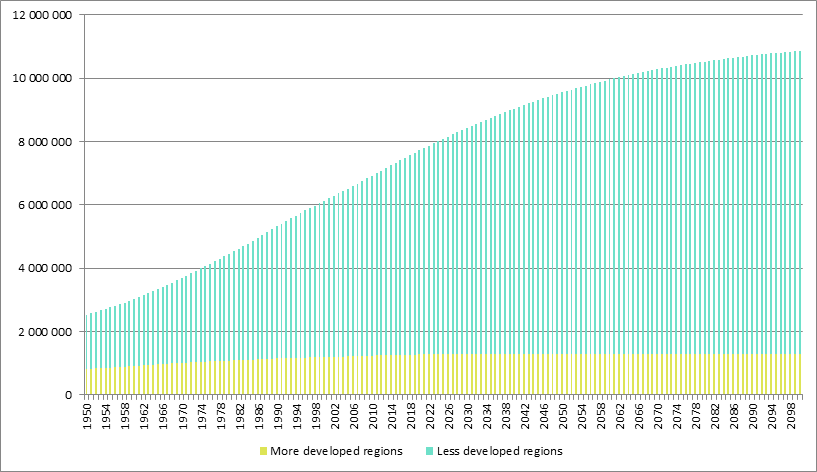
This is a really scary scenario for our planet, in so many ways.
I, for one, am worried how we will feed all these people, and how we will feed everyone without destroying our environment.
Livestock and intensive farming practices are one of the largest emitters of greenhouse gases, which contribute to climate change, the greatest environmental challenge of our generation (after human overpopulation of course!). It’s not just the methane released by cattle either – I’m referring to the widespread destruction of wide habitat for the purpose of raising livestock for human consumption.
So, I choose to restrict meat and seafood (and avoid processed foods almost altogether) for environmental reasons and know that our world desperately needs more people to do the same. After all, we are part of our environment and if our environment isn’t healthy, there is no possible way we can thrive.

- Sustainable Home Design- factors to consider to maximise sustainability - July 28, 2022
- Advantage and Disadvantages of Tiny Houses - May 31, 2022
- How School Strike 4 Climate is Empowering Youth to Fight for Their Future - May 1, 2022
 Laura Trotta is one of Australia’s leading home sustainability experts. She has a Bachelor of Environmental Engineering, a Masters of Science (in Environmental Chemistry) and spent 11 years working as an environmental professional before creating her first online eco business, Sustainababy, in 2009. She has won numerous regional and national awards for her fresh and inspiring take on living an ‘ecoceptional’ life (including most recently winning the Brand South Australia Flinders University Education Award (2015) for the north-west region in SA and silver in the Eco-friendly category of the 2015 Ausmumpreneur Awards). With a regular segment on ABC Radio and with her work featured in publications like Nurture Parenting and My Child Magazine, Laura is an eco thought leader who’s not afraid to challenge the status quo. A passionate believer in addressing the small things to achieve big change, and protecting the planet in practical ways, Laura lives with her husband and two sons in outback South Australia.
Love this! I am vegetarian for environmental, ethical and health reasons and i really resonate with this. I was vegan for a few years until early in my pregnancy and craved eggs. And i have kept them in my diet since and are getting some happy chickens soon (the coop is almost built)!
It would be interesting if you could address the recent articles that have been going around claiming that a vegetarian diet is worse for the environment. I think the American study which looked at the environmental impact of lettuce was a bit silly as nobody just eats lettuce: http://www.sciencealert.com/vegetarian-and-healthy-diets-may-actually-be-worse-for-the-environment-study-finds and the same study found dairy and fish to be the worst environmentally.
But there was also an opinion piece making the rounds amongst permies focusing on Australia and claiming because a lot of animal farming happens on less arable land it is better for the environment than growing more plant foods: http://theconversation.com/ordering-the-vegetarian-meal-theres-more-animal-blood-on-your-hands-4659
My personal take on this is that may be true if all you eat is wheat and soy but it is solved by less reliance on broad acre cropping and more ecologically diverse more intensive local food systems (like permaculture designs). Also i see an awful lot of usable land around the place unused or with cattle on it that could grow humanly edible plant foods if better earthworks were in place to create sustainable water supplies. That’s my take on it. But what do you think?
Hey Ange – thanks for your comments! There’ll always be articles claiming that different diets are healthier and more eco-friendly than others but in my opinion, a wholefood diet rich in plants wins hands down. The environmental impact of livestock farming is extensive, even on less arable land. and it’s not limited to the land use, but also the plant food that is used to feed the animals as well as methane from cattle etc. I think the first step people can do to eco-fy their diets is to reduce their consumption of processed foods (including soft drinks and drinks in single-use containers) and then move onto reducing their meat and seafood consumption. One step at a time and all….. 😉